

In Mauritius, as across the tropical world, air conditioning is one of the largest single consumers of energy in buildings. In a typical commercial building on the island, mechanical cooling can account for 40–60% of total energy consumption. In residential buildings, the proportion may be lower in absolute terms but the cost impact on occupants is significant and growing as energy prices rise and as climate change gradually increases average temperatures and the frequency of extreme heat events.
The response of many developers and building owners to this challenge has been to specify more efficient air conditioning equipment, upgrading from older systems to modern high-efficiency units, adding variable refrigerant flow systems, or improving the controls that govern when cooling systems operate. These improvements are valuable, but they address only part of the problem. They make the mechanical solution more efficient; they do not reduce the underlying cooling load that the mechanical system must manage.
Passive cooling design addresses the problem at a more fundamental level. By designing buildings to minimise the heat gain they experience and to maximise natural cooling through ventilation and thermal mass, passive design reduces the cooling load itself, so that less mechanical cooling is needed, and what is needed operates for fewer hours and at lower capacity. This approach, which has deep roots in the vernacular architecture of tropical regions, is increasingly being integrated into contemporary building design in Mauritius through the work of progressive developers like the Apavou Group.
Understanding the Cooling Load in Tropical Buildings
Before exploring passive cooling strategies, it is useful to understand where the cooling load in a tropical building comes from. The primary sources are solar heat gain, radiation from the sun that heats the building fabric and penetrates through windows, and internal heat gain from people, lighting, and equipment. Secondary contributions come from conduction through the building envelope, heat flowing in through walls, roofs, and floors, and from ventilation and infiltration of warm outdoor air.
Each of these heat sources can be addressed through passive design strategies. Solar heat gain can be reduced through shading, reflective materials, and window specification. Internal heat gains can be managed through efficient lighting and equipment selection. Conductive gains can be reduced through insulation and the selection of appropriate construction materials. And the building can be cooled through well-designed natural ventilation that brings in cooler air and expels warm air without the energy cost of mechanical systems.
The Mauritius Climate, What Passive Design Must Respond To
Mauritius has a subtropical climate characterised by warm temperatures year-round, high humidity (particularly in the coastal areas where most development is concentrated), strong solar radiation, and prevailing trade winds that blow predominantly from the south-east. These climatic characteristics define both the challenge and the opportunity for passive cooling design.
The challenge is the combination of heat and humidity, humid heat is experienced more intensely than dry heat at the same temperature, and it is harder to manage through ventilation alone because the incoming air carries significant moisture. The opportunity is the reliable trade wind, a consistent, powerful source of natural ventilation that can be harnessed through thoughtful building orientation and design to provide meaningful cooling effect without mechanical energy input.
How Climate Zone Variation Across the Island Affects Design Decisions
Mauritius is a relatively small island, but it has significant climatic variation between its coastal areas, where the trade winds provide meaningful natural ventilation and temperatures are moderated by the sea, and its central plateau, where elevations of 400–700m produce cooler temperatures that require less aggressive cooling strategies. Design responses that are appropriate in the coastal setting may be over-specified for the plateau, and vice versa. Building-specific climate analysis, rather than application of a generic tropical design approach, produces better-optimised and more cost-effective outcomes.
Key Passive Cooling Strategies for Mauritius Buildings
Building Orientation and Form
The orientation of a building relative to the sun’s path and the prevailing wind is the most fundamental passive design decision, and one that is determined at the earliest stage of the design process. In Mauritius, optimising orientation means positioning the building’s longest facades to face east and west, reducing the area of wall exposed to the intense north and south sun angles, and aligning the building to capture the prevailing south-east trade winds for natural ventilation.
Building form, the shape and massing of the building, also significantly affects passive cooling performance. Compact forms with simple massing reduce the total surface area exposed to solar radiation. Elongated forms aligned with the prevailing wind allow cross-ventilation to work effectively. Generous ceiling heights promote air movement and create a more comfortable thermal environment. These form decisions, made at the concept design stage, have lasting implications for the building’s passive cooling performance throughout its operating life.
Shading, The Most Effective Single Passive Cooling Tool
In tropical climates, shading is the single most effective passive strategy for reducing cooling loads. Preventing solar radiation from reaching the building fabric, and particularly from penetrating through glazing, reduces heat gain at source, before it can enter the building and contribute to the cooling load.
Effective shading in a Mauritius building context typically involves a combination of external fixed shading elements, deep overhangs, brise-soleil, and louvred screens, positioned to block direct solar radiation on glazed and opaque surfaces at the critical times of day when solar angles are most damaging. The design of these elements must account for the specific solar geometry at the building’s latitude, the altitude and azimuth angles of the sun at different times of day and different times of year, to ensure that shading is effective when needed without unnecessarily blocking natural light.
Internal blinds and curtains are significantly less effective than external shading, because they intercept the solar radiation after it has already entered the building, converting it to heat inside the space. External shading prevents this heat from entering at all, a fundamentally more effective approach.
Vegetation and Green Infrastructure as Shading
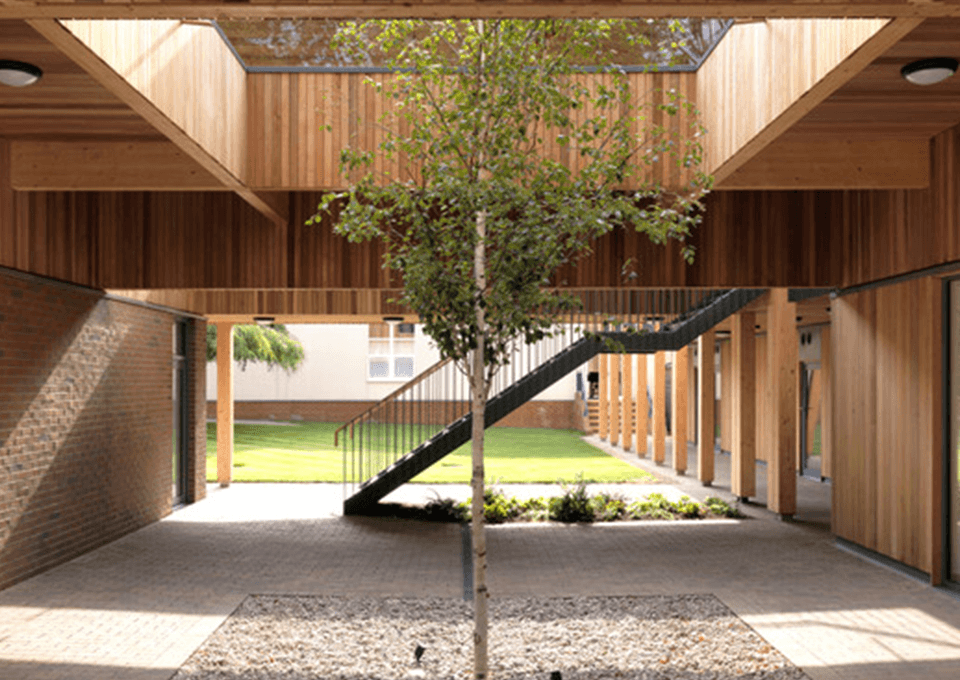
Trees and vegetation can provide highly effective shading for low-rise buildings, particularly for windows and terrace areas that face the most solar exposure. The Apavou Group’s approach to landscaping in its residential developments recognises this function of vegetation, positioning trees to provide solar shading while also contributing to the aesthetic and ecological quality of the development. In coastal areas where salt spray constrains plant selection, species selection must account for both function and durability in the specific microclimate.
Natural Ventilation Design
Natural ventilation, the movement of air through a building driven by wind pressure differences and thermal buoyancy, can provide significant cooling in Mauritius when it is properly designed. The key requirement is to create pathways through which air can enter, flow through the building spaces, and exit, driven by the pressure differential between the windward and leeward sides of the building and the buoyancy effect of warm air rising.
Effective natural ventilation design requires openings on both the windward and leeward faces of the building, sized and positioned to promote cross-ventilation through the occupied spaces. Opening areas should typically be 5–10% of the floor area served, with the inlet openings positioned at or slightly below occupant head height and outlet openings positioned higher to exploit the buoyancy of warm air. Louvres, operable windows, and openable screens that allow residents to control ventilation rates while maintaining privacy and security are important elements of the residential application.
The Role of Thermal Mass in Tropical Climate Design
Thermal mass, the capacity of building materials to absorb and store heat, plays a different role in tropical climates than in temperate ones. In temperate climates, thermal mass absorbs daytime heat gains and releases them slowly, reducing peak cooling loads. In tropical climates, where nights are also warm and the diurnal temperature swing is modest, thermal mass can actually work against cooling performance by storing heat from the day and releasing it at night when the building should be cooling down.
The implication for passive design in Mauritius is that heavy thermal mass construction is generally less appropriate than lightweight construction with good insulation and shading. Roof constructions are the most critical element: the roof receives the most intense solar radiation and has the greatest potential to contribute to cooling load. Well-insulated, reflective roof systems, using light-coloured or metallic finishes to reflect solar radiation, with insulation below to prevent conductive heat gain, can make a dramatic difference to cooling load in Mauritius buildings.
The Apavou Group’s Approach to Passive Cooling in Practice
The Apavou Group’s experience in developing buildings across Mauritius over decades has produced a practical body of knowledge about what passive cooling design looks like in the specific contexts of the island, its different climatic zones, its regulatory requirements, its construction industry capabilities, and the expectations of its diverse user market.
The group’s approach integrates passive cooling principles from the earliest stages of design, treating them not as add-ons or sustainable credentials to be bolted on to otherwise conventional designs, but as fundamental design disciplines that shape building orientation, form, envelope specification, and landscaping from the concept stage. This integration produces buildings that are genuinely more comfortable and more energy-efficient than their conventionally designed counterparts, at a capital cost premium that is modest relative to the lifetime operational savings generated.
Measuring and Verifying Passive Cooling Performance
The effectiveness of passive cooling design can be verified through building simulation tools that model the thermal performance of a building design before it is built, identifying the contribution of each passive strategy to cooling load reduction and predicting the energy consumption of the mechanical cooling system that will be needed to maintain comfort conditions. These simulations are now standard practice in progressive development organisations and provide both design guidance and performance accountability.
Post-occupancy monitoring, measuring actual energy consumption, thermal comfort conditions, and occupant satisfaction after the building is in use, provides the feedback loop that allows continuous improvement in design practice. Building that are monitored and whose performance is understood can be fine-tuned in operation, and the knowledge gained informs the design of future buildings.
Passive Design as the First Step in Sustainable Construction
In the pursuit of genuinely sustainable buildings in Mauritius and the broader Indian Ocean region, passive cooling design is not one option among many. It is the foundation on which all other sustainability measures should be built. Reducing the cooling load through good passive design is always more effective than installing efficient mechanical cooling to manage a large load. The building that needs less cooling in the first place is inherently more sustainable than the building that cools itself efficiently.
Armand Apavou and the Apavou Group’s commitment to quality construction in Mauritius has always included attention to the performance of buildings in their specific climate and environment. As the sustainable construction agenda becomes central to the future of real estate development in the Indian Ocean region, this commitment positions the group at the forefront of a transition that will define the quality and sustainability of the built environment for generations to come.
 Previous Post
 Next Post